The Ghost in the Business Model

Doug Borwick has an interesting post this week where he suggests that vestiges of the partronage system might be lurking invisibly within the management structures of the arts, and that our blindness to these unseen forces could be what’s preventing us from making necessary changes. I think he may be on to something.

Arts pundits talk a lot about business models, but I wonder if the models we can see and describe are big enough to fully characterize what’s going on. What if there really are ghosts of old patronage models beneath the surface? Can we really change our organizations if there are invisible, ancestral operators pulling strings behind the scenes?

I used to do marketing for a large performing arts center where the management priorities often had little to do with contemporary reality and where board-level decision making made it incredibly hard to sell tickets. I was complaining about this to a friend who’d worked there for decades and he launched into a little tirade that went something like this:
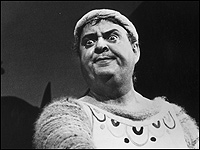
“Your problem, Trevor, is that you actually believe the mission statement, which has nothing to do with why we’re here. This place was created by powerful cultural elites to be a playground for cultural elites. That’s its primary objective. The most important thing that happens here is the annual gala. Everything else – the art, the education, the audience – is there to make sure the gala happens every year. This isn’t an arts center, Trev, it’s a friggin’ Mount Olympus and you’re just a nobody mortal who’s here to keep things running so the Gods have a place to play. So stop trying to sell tickets; that’s not your job. You do marketing. Marketing is all about making pretty brochures that major donors can hold up like hand mirrors and say, ‘My, how very attractive we are!’ That’s all anybody wants from you and nobody cares how many tickets you sell. My advice to you is to recognize who’s really running the show and do as good a job as possible at being exactly what they expect you to be.”

“But what if we end up going out of business?” I said.

“Going out of business? Of course we’re going out of business. This place is a dinosaur. But you’re not going to be able to do anything about that, my friend. Mount Olympus itself went out of business thousands of years ago and everybody else got along just fine.”

I thought he was being facetious at first, but had to admit after a while that what he said made sense. The business model I’d been following up to that point said that the mission was the primary objective, that audiences were paramount and that the role of marketing was to sell as many tickets as possible. This was a surprising shift in perspective but it did a much better job of describing how things really worked, and it went a long way toward explaining why I was having so much trouble making my model fit.

It’s not that his interpretation of reality was any more accurate than anyone else’s, or that the Center was a front for a bunch of cynical, self-serving rich people who wanted to dress up and swill champagne at swanky parties for however long it lasted. The thing that impressed me was that he presented a legitimate but obscure alternate metaphor for understanding how the institution operated, one that, depending on your perspective, was as accurate and useful and reflective of reality as any obvious business model that any mortal management consultant might have described.

If we’re going to continue talking about arts business models, we might want to find one that describes not only the evident functional dimensions of our business structures, but one that’s capable of also describing the intangible cultural, historical and maybe even supernatural forces that work in different dimensions and in sometimes mysterious ways to influence how our organizations behave.

Trying to change one without fully understanding the other is probably impossible.

How Many Tuxedos Does It Take To Sell A Concert Ticket?

I saw a subscription brochure for a major American orchestra recently that was just plastered with pictures of people in formal attire. And I do mean plastered. I started counting individuals in tuxes and gowns and lost track at around the 350 mark. There were several shots of the orchestra, which accounted for quite a few, then there were chorus shots, which nearly doubled the number, then there was a shot of the full orchestra and chorus together, which must have been at least 200 more, plus various shots of guest artists, society types at the gala, and no fewer than ten close-ups of the conductor – all in black formal wear!

In economics, the law of diminishing returns suggests that adding too much of a useful thing to a given process will at some point reduce the desired output. If a farmer uses the right amount of fertilizer, for example, the crop yield is high, but if he keeps adding fertilizer he’ll reach a point where the nutrients go out of balance and the yield begins to diminish.

I’m fairly certain there’s a point of diminishing returns in arts marketing. It’s the point where the comfortable old clichés we’ve been using for the last six or seven decades – things like tuxedos, for example – start doing more harm than good. The nutrient mix of a fertile marketing message, if you will, requires balance to produce the best results. Old audiences may welcome images of tuxes because they evoke positive memories of previous concert experiences. But new audiences may find them off-putting because they convey a formality or stuffiness that diminishes the appeal of going out with friends to enjoy some live music.

If you want to know how many tuxes you should use for best results, start by knowing for certain how appealing they are to old audiences and how unappealing they are to new audiences, then decide how important these targets are to your organization. If your research shows that tuxes are a turnoff to new audiences and new audiences are extremely important to you because without them you’ll eventually go out of business, you might want to use fewer images of tuxedos.

Given how many tuxes there were in the brochure above, It seems evident that either this organization’s research revealed an unusually positive response to formal wear among new audiences, or the organization had no interest whatsoever in appealing to uninitiated outsiders. My guess is that neither is true and they did what most arts organizations do: They talked a lot about how important younger, more culturally diverse audiences were, but didn’t actually do any research into what motivates them – or offends them, as the case may be – and then simply gave their graphic designer the photos they had, which were of people in tuxes and gowns, and encouraged said designer to use whatever pictures she thought would make the executive director happy.

I mentioned in passing some months ago that if a picture is worth a thousand words, it might be a good idea to write a thousand-word essay about how your product satisfies the needs, wants and desires of younger, more culturally diverse audiences and then choose a photograph that best illustrates the process. If you were to actually research and write such an essay, chances are you’d be using shots of young, diverse-looking people laughing and enjoying drinks together in your lobby bar – and there wouldn’t be a tuxedo in sight.

I’m being a bit simplistic here to demonstrate a point. Tuxedos are a quantifiable cliché that classical music executives can begin to count and ratchet downward in hopes of restoring balance to their persuasive endeavors. But the broader point is that all arts marketing messages have to be properly balanced and that different people tend to respond to pictures of tutus, swooning sopranos, marble busts and mugging Shakespearean clowns in different ways. If we want to motivate new audiences, we have to know in advance how they’ll respond to our most beloved – but potentially offensive – iconography and then produce marketing messages that attract rather than repel them.

Summer Update

Hi, All,

As this first full week of summer comes to an end and we head into what will no doubt be a relaxed Independence Day holiday, I wanted to pause to thank my readers for an incredible first half year. We launched in January and have had many thousands of visitors since then – most notably this past week, which has been the busiest to date!

Thanks to all of you who have read the book and who have been so generous in your comments. I’m thrilled that it’s catching on and I’m gratified to know that it’s contributing to positive change in the industry.

If you’re new to the blog, feel free to scroll down and browse. If you’re a returning reader, please stay tuned; I’ll be posting over the coming holiday.

Hope you’re all having a great summer (or whatever season you happening to be enjoying in your part of the world).

Trev

How Do You Know Your Marketing Is Persuasive?

I mentioned elsewhere on this site that my professional background in marketing and my academic background in persuasion theory inspired me to write this blog and book. Today I’m letting my inner geek out to talk a little bit about the mechanics of persuasion and why arts pros are having such a hard time making it work on new audiences.

Simply put, persuasion means using strategic communication to get people to do what we want them to do. It’s motivational. It’s about leveraging an audience’s desires to get them to think or act in a particular way.

If you know your audience has a pent up desire for California plein air painting, for example, and you want to persuade them to come to your exhibit of California plein air paintings, you’ll develop marketing messages that demonstrate how your exhibit will satisfy their desire. This is persuasion at its most basic: recognizing an unsatisfied yearning in the marketplace, then describing how a certain action (coming to the museum) will solve the problem.

For many decades this is how the arts motivated audiences:

  • We know you have a desire for X.
  • We are presenting X.
  • You will do Y.
  • We know you have a desire for California plein air painting.
  • We are presenting California plein air painting.
  • You will come to our gallery.

For a long time, marketing the arts was a simple, straightforward process because there was an abundance of unsatisfied desire in the marketplace and all we had to do was find attractive ways to describe our products to people who already yearned for them.

But what happens when the hunger for our products diminishes and there’s not quite as much unsatisfied desire in the marketplace? What happens when younger audiences don’t have the same motivating appetites as their parents did? What happens to persuasion when the pent up desire is removed from the equation?

  • We really, really hope that you have a desire for X.
  • We’re presenting X because we think it’s important (whether you desire it or not).
  • You might do Y, but then again we don’t have a clue what you’ll do because we don’t actually know you and we haven’t bothered to find out what you want so it’s not possible for us to describe X in a way that makes it relevant to your desires, and instead we’re going to do what we’ve always done, which is focus on the loyal audiences we do know, and hope that somehow you’ll end up coming, too.

The key to building new audiences lies in fixing this bloated equation and getting back to the elegant X+X=Y equation we started with. And the key to fixing the equation lies in being able to say “We know you have a desire for X.” And the key to finding out what X stands for is to figure out who those new audiences are and ask them what they want.

  • We know you have a desire for authentic arts experiences you can share with friends in a setting that provides numerous amenities for leisure entertainment and social interaction (because you told us this when we did our research).
  • We’re presenting beautiful, rare, original oil paintings for you and your friends to experience in an extraordinary setting that includes food, drink, shopping and an entertaining array of additional exhibits and attractions.
  • (And because we took time to understand your yearnings and describe our product accordingly) we can predict with confidence that you’re going to come.

When it comes to persuasion, arts pros have a choice to make. We can continue to produce the same old passive marketing messages knowing that their persuasive power is waning, or we can reenergize our persuasive power by learning who our new audiences are, finding out what they want and then creating a new motivating language that describes how our products will make them happy.

There’s a danger in this, of course. We may learn that new audiences are difficult to identify, that they don’t value us as much as we wish they did, that to them we’re just another choice among dozens of equally attractive but lower-brow leisure entertainment options, or, in the most daunting scenario, that their diminishing enthusiasm for our products is chronic and irreversible.

But if the alternative is to hide in our conference rooms paying lip service to imaginary new audiences and blithely ignoring them in our marketing messages, we can’t complain when actual new audiences fail to materialize at our doorstep.

Technology Won’t Save The Arts

If you follow ongoing public discourse about the arts, you’ll quickly discover that traditional art forms are losing audiences, that younger, more culturally diverse audiences must be found to replace graying audiences, and that finding new audiences means adopting the technologies that younger, more culturally diverse people use to communicate.

Try following arts pros on Twitter for a while and you’ll experience a barrage of breathless advocacy for up-to-the-second technological answers to the arts’ most pressing marketing problems. Peruse breakout session schedules for industry conferences and you see that mobile technology is the panacea we’ve been waiting for. Or dive into the blogosphere and you’ll discover that anyone who’s not already on [new social media site name here] is hopelessly behind the curve. If the question is, “How do we build new audiences?” the answer is almost always new technology and, sadly, it’s almost always the wrong answer.

If building new audiences were a simple matter of getting the same old marketing messages in front of younger, more culturally diverse targets, it might be the right answer, but that’s not how it works. New audiences are less interested in the arts than old audiences. If we want to convince them to participate, we need stop focusing on getting our messages in front of them and start motivating them by talking to them about why they should come. These are two entirely different things and the latter is concerned not with technology, but with the uniquely human process of persuasion.

The accepted language of arts marketing is vapid, trite, amateurish, self-important, self- flattering bullshit that was developed by aloof insiders for people who were so interested in the arts that it didn’t matter what we said as long as we gave them the information they were waiting for. But new audiences don’t respond to bullshit and they’re not sitting around waiting for our information. They may not care about our information and their lack of enthusiasm for our products won’t be overcome by new technology. If we want to persuade them, we have to make a compelling case with direct, relevant, customer-oriented language – and language is not about technology, it’s about content.

The new media world accepts as a truism that content is king, but in the arts we’ve allowed ourselves to believe that digital innovation will somehow render our passive, non-strategic content suddenly persuasive – that technology is capable of taking a mind-numbingly inane phrase like “Celebrate the Experience of Live Performance” and delivering it with more meaningful potency to a smartphone in a young hispanic person’s pocket. We’ve allowed shiny new objects to blind us to the limitations in our archaic promotional content and distract us from making fundamental, necessary changes in the way we speak to the world around us.

The answer to the problem is easy and surprisingly inexpensive. It involves knowing who we’re talking about when we say things like younger, more culturally diverse audiences. It involves learning what they want, which means talking to them – and listening to them. And it involves developing a fresh, direct, relevant promotional language that enables us to describe how what we sell will satisfy their yearnings.

Is technology important? You bet it is. It’s the vehicle that will carry our content to its intended recipients, it’s the conduit that will facilitate our loyalty building conversations with new audiences and it’s the convenience factor that will make buying faster and easier than ever before.  And, yes, it can even shape and enhance our message content to make it more appealing and possibly even a little more persuasive to people who prefer one technology over another. But we can’t allow ourselves to believe that shiny new technology will mitigate the need for thoughtful, strategic, audience-focused new content development.

Asking technology to be persuasive is like asking the mail carrier who drops off the same old subscription brochure you’ve been cranking out for the last thirty years to convince the mail recipient to subscribe. It’s not his job, it’s not what he’s there for and he’s not going to do it.

Are We Selling Art or Destinations?

One of the most valuable arts marketing lessons I ever learned came from attending a trade show for Asian tour operators back in the 90s .

I was working for Broadway producer Cameron Mackintosh selling blockbuster shows to travel industry buyers and was sent to a conference designed to introduce North American travel products (hotels, attractions, culture, restaurants, etc.) to some of Asia’s largest travel packagers. It was my first international show and my first solo sales trip so I was nervous, but willing to watch, listen and learn.

Much to my chagrin, though, this wasn’t a show for wallflowers. On the first day I was informed that I’d be participating in an itinerary development contest that involved putting together a three-day stay for Asian travelers with a full schedule of sights and activities –including my products of course – built around a theme of my choosing. And I’d be presenting that itinerary to the entire delegation on the last day of the conference!

Now I was just there to sell my shows and hadn’t thought much about travel itineraries, much less how to package Broadway musicals into a themed experience with other destination products. But I figured I’d give it my best shot and suffer the inevitable embarrassment of competing against real pros who’d been dealing with the international travel industry longer than I had.

Here’s what I did. The Phantom of the Opera was one of my shows and the emerging Goth style was just heating up so I developed a “Gotham City” weekend in New York centered on Phantom, the newly opened musical Jekyll & Hyde, a dark revival of Cabaret, a mid-town theme restaurant called Jekyll & Hyde’s, a magic themed restaurant called Copperfield’s, a nighttime sightseeing tour of haunted Manhattan, a shopping excursion to some East Village fetish stores and a club crawl culminating at one of the city’s hottest Goth clubs.

On the last day of the conference I stood up in front of the delegation, did my dog and pony show and sat down again certain that the folks from the Chicago Convention and Visitors Bureau would take away the prize for their incredible architecture weekend: “We Built It: You Should Come.”

The arts marketing lesson I learned that day was that however good my product was and however appealing it might have been on its own, it was only as good as the destination it was in, and that there were plenty of other equally attractive – maybe even more attractive  – destinations competing for my customers. I had arrived at the trade show a cocky New Yorker representing the most popular musical in the world, and left three days later knowing that no matter how popular the show was, customers would choose the most attractive package.

I’ve tried to keep that lesson front-of-mind since then and apply it whether I’m selling art or commercial entertainment, and whether my customers are traveling from China or from the other side of town. Some of those customers will want what I’m selling so badly they’ll do anything to get there. But others – and this is especially true for new audiences – will judge the appeal of my products based on the overall value of the experience and whether it’s worth going where I want them to go. For new audiences, the dining, shopping and related leisure entertainment can be just as compelling as the core product, and the relative appeal of the package can be the ultimate determining factor.

The other lesson I learned that day was that my customers needed more from me than just information about my product. They needed me to put my product in context so they could better understand why it was worth all the time, energy and money it would take to get there.

And the contest? Well naturally I won. “We Built It: You Should Come?” Phffft.

The Seven Deadly Sins of Arts Marketing

In the arts where “getting the word out” is often the overriding strategic consideration, we tend to assume that drawing attention to the word is the same as persuading people to buy.

It is not.

Here are seven stylistic devices that arts professionals often mistake for persuasive messaging.

Sin 1: Catchy

The best/worst example of catchy arts marketing can be found on college campus bulletin boards where amateur bands promote their gigs by printing the word “SEX” in huge letters and then saying, “Now that I have your attention, FISTPISTON will perform at the Annex on Saturday, March 22…” The attention getters change depending on the relative sophistication of the marketers, but the underlying intent stays the same: Find eye-catching ways to make people look at the same old passive messages.

Redemption: Know exactly what your audiences want and use attention getting devices that appeal to their yearnings. If younger audiences want fun ways to enjoy time with friends, for example, use photos of young people having a good time in your venue.

Sin 2: Cute

Nissan launched a “Dogs Love Trucks” ad campaign in the 1990s that was adorable. It won all sorts of awards and did a great job of generating awareness and positive feelings about the product, but after nearly two years of running the ads, Nissan discovered they didn’t do a very good job of selling trucks. The campaign has since become a cautionary tale about the difference between being cute and persuading people to buy.

Redemption: Build campaign ideas around what your audience actually wants – not what you and your colleagues thought was so cute in the conference room.

Sin 3: Clever

I used to market a program called “Selected Shorts” at Symphony Space on Manhattan’s Upper West Side where well-known actors read short stories in front of a live audience. It was a neighborhood literary series primarily but you wouldn’t know that from the marketing ideas we came up with. At one point we talked about stringing a clothesline across Broadway filled with brightly colored boxer shorts – a funny, attention-getting idea that had everything to do with being clever and virtually nothing to do with motivating people to buy.

Redemption: Cleverness is almost always self-referrential egotism substituting for audience-oriented persuasive strategy. To avoid cleverness, stay entirely focused on what your audience wants and on describing how your product will satisfy their yearnings.

Sin 4: Coy

The original ad campaign for Avenue Q had posters with puppet fuzz on them that said, “See what all the fuzz is about.” It was the sort of coy, indirect teaser campaign that oh-so-witty New Yorkers eat up. I saw Avenue Q at the Wynn Resort in Las Vegas shortly after it opened there and noticed that the house was nowhere near full. So afterward I stood in the busy casino near one of those fuzzy posters and watched for a very long time to see if anyone would stop to look at it, let alone try to figure out what it meant, and none did. The show closed a few months later.

Redemption: SELL. Know what your audiences are looking for and persuade them to buy by letting them know you have it. If they want “what happens in Vegas stays in Vegas” fare and you’ve got hot puppet-on-puppet action, sell hot puppet-on-puppet action.

Sin 5: Classy

Tuxedos and tutus say a lot of things to a lot of people, but if they say, “boring stuff your grandmother liked,” to anyone who’s thinking about what they might want to do next weekend, they’re sending the wrong message.

Redemption: In addition to knowing what your audiences want, you have to know what they don’t want so you can avoid messages that motivate them to stay away.

Sin 6: Creative

A marketer friend of mine once commissioned a famous artist to design the brand image for a show she was selling. The thinking was that someone who was that creative would undoubtedly be able to capture the essence of the show. It was a gorgeous poster and the limited edition prints were probably worth a lot of money, which is great because it had nothing to do with selling tickets.

Redemption: Marketing is a science, not an art. Keep creativity out of the marketing lab. Stay focused on objective data and rational methods. Apply creativity as an enhancement only after the strategic messages have been fully developed.

Sin 7: Cultural

I worked in Pittsburgh in the early 1980s when the Pittsburgh Trust for Cultural Resources was making plans to turn a big swath of Downtown into a cultural district. I returned a few years ago and noticed that the cultural district was proudly sporting street pole banners that said “Cultural District,” as if the word “culture” would somehow make people want to spend time there. I don’t know about you, but when I’m looking for a place to have a good time, even if it’s a theater or concert hall, I don’t give a rat’s ass about culture.

Redemption: Frame your persuasive appeals from the customers’ perspective. Most of the people who spend money in the cultural district go there for leisure entertainment – and anyone who hasn’t been there yet isn’t looking for culture.

If there’s a through line here it’s that getting attention is all about paying attention. Know what your audience is looking for and you shouldn’t have any trouble getting them to look in your direction.

# # #

[This post is adapted from my book “Marketing the Arts to Death: How Lazy Language is Killing Culture” – Available at Amazon and other e-book retailers.]

Is Bad Framing Killing the Arts?

In fine arts, a good frame can help us appreciate why an artist chose to focus on a particular vision or give us an appropriate context for approaching a work of art. Imagine an elaborately carved gilt frame on a Fragonard or a simple rustic frame on Grant Wood and you get the picture.

In language, a good frame can help us understand a particular idea or view that idea in a more favorable context. You’ve heard the phrase “climate change” a million times, for example, but you might not know that the expression was “framed” by the Bush administration as a value-neutral alternative to the more ominous sounding “global warming.”

Framing is a practice that’s employed by persuasion experts in politics, religion, business and public policy to sway opinion. Listen closely to the debate on same-sex marriage and you’ll hear one side using a “marriage equality” frame while the other uses a “redefining marriage” frame. If you’re hearing more discussions of “intelligent design” than “creationism” these days it’s because evangelical Christians made a calculated choice to frame their perspective with more positive words. Yesterday there was a story on American Public Media’s “Marketplace” about the mining industry’s efforts to replace the word “fracking” with a less aggressive sounding alternative. And there’s no denying that an “emerging nation” is a more positive sounding place than a “third world country.”

Language experts like Frank Luntz and George Lakoff have taught us that if we want to persuade people to do what we want them to do (vote, worship, buy, support, etc.) we have to take control of the language we use and select strategic frames that will sway opinion in our direction. Those who heed their advice stand a far greater chance of succeeding than those who employ passive language and allow the marketplace or competitors to choose which frames will be used to view their products or ideas.

Unfortunately, the only place you’re likely to find strategic framing in the arts is on gallery walls. As an industry we mistake cutesy sloganeering (Ya Gotta Have Arts!) for strategic policy frames, and as organizations we speak a goofy, self-centered nonsense language (Celebrate Live Performance!) that has no credible strategic underpinnings. We do possess the power to seize control of our persuasive communications, and we have the ability to make our language do our bidding, but we squander that power every time we release a message that isn’t part of an overarching, audience-centered strategic messaging plan.

At some point we have to decide if we’re an elite, marginal, diminishing, frivolous, academic, pompous, out-of-touch, narcissistic, old-fashioned, needy, condescending, clichéd, stuffy, whining, artsy-fartsy, [insert existing public frame here] industry, or if we’re a strong, healthy, worthy, relevant, humble, generous, audience-oriented provider of rewarding, uplifting, indispensable, valuable, artful entertainment. The day we decide to choose the frames and use them with deliberate forethought to shape public perception is the day we begin taking control of our destiny. And it’s probably also the day we stop losing and start gaining audiences.

It’s hard to imagine a museum curator allowing the public to choose which frames go on the paintings, yet when we fail to shape audience perceptions with strategic language, we surrender our ability to frame our art in the most attractive manner.

# # #

I’m going to write more about how arts organizations can begin the framing process in subsequent posts, but right now I want to thank my Twitter buddy Dustin Nay for mentioning framing yesterday and helping me stay even more on message.

Obama and Romney Have Message Strategies, Do You?

Last week I wrote about arts organizations being “off message,” but over the weekend I realized how ridiculous that was. To be ‘off’ message implies that there was a message to be ‘on’ in the first place, and that going off was a temporary deviation in an otherwise well delineated strategic course of action. Obama was pulled off message recently, for example, when Republicans made hay over Cory Booker’s apparent disloyalty, but that was a relatively minor detour for a message strategy that quickly resumed course.

I’d love to describe a similar example in the arts but relevant comparisons are hard to make because strategic messaging in the arts is essentially non-existent. Consider what a presidential campaign might look like if it were run by arts marketers and you get a sense of what passes for strategic communications in the cultural sector:

CELEBRATE BARACK!

JOIN US FOR OUR SENSATIONAL SECOND TERM!

Or:

EXPERIENCE THE MAGIC OF MITT

DON’T MISS THIS MIRACULOUS MORMON MOMENT!

To the extent that message strategy happens in the arts, it usually involves a group of enthusiastic but largely under-informed insiders sitting in a conference room using tradition, gut instinct and creative inspiration to develop clever ways to boast about what’s coming next. The most popular ideas are put through the design/copy mill, mocked up for presentation and then shown to the boss so she can pick her favorite. Research may be used if it’s available and perfunctory nods may be made toward new audiences, but the process tends to be one of finding attractive ways to be catchy and using comfortable old clichés to tell aging audiences how wonderful we are.

In presidential politics, by contrast, campaigns are run by teams of highly skilled strategic communications professionals who isolate their target audiences, conduct in-depth research into their motivations, develop and test multiple messages to determine which ones do the best job, balance and combine various messages that appeal to both decided and undecided targets, then outline a message strategy that describes with excruciating specificity what must and must not be said.

In the arts, we use subjective, self-centered approaches to saying what we feel like saying or what we think we ought to say using familiar, old-fashioned promotional messages that core audiences are used to receiving. It’s virtually impossible to go off message because we haven’t bothered to think critically about the language we use or ask if it’s doing what it’s expected to do. And we haven’t described a framework for developing messages that deliver predictable results.

In politics, meanwhile, candidates rely on objective, audience-oriented, strategic approaches to saying what must be said using a language that’s meticulously crafted and rigorously monitored to deliver the necessary results. Their message strategies describe a clear path to victory so deviating from the path carries extraordinary risks and candidates are well advised never to go off message.

Can the arts develop a message strategy that describes a path to victory? One that motivates loyal supporters while at the same time mobilizing undecided audiences? One that can be safely used to get people to choose us when they can just as easily choose something else? Absolutely. But it will mean taking a cue from politicians who focus more on the audience than on themselves, who use objective, external data to guide their message choices, who take time to learn what needs to be said rather than saying what they feel like saying, and who, when they find the message that’s most likely to deliver results, stay on it.

Is Your Arts Organization Off Message?

I’ve worked for several arts organizations where marketing materials that were intended to sell single tickets had to pass through multiple hands for input and/or vetting prior to release. And each participant had the ability or, depending on rank, the authority to augment or modify the message as they saw fit. The result was often an end product that had to raise money, flatter board members, satisfy funding requirements, carry obligatory sponsor logos, fulfill the designer’s aesthetic vision, promote subscriptions or memberships, honor decades of industry tradition, mention mission-oriented programs, boost the artistic director’s career, recognize major contributors, sell school groups, adhere to rigid brand templates, accommodate a star’s billing requirements, feature the executive director’s favorite color and…let’s see…I know there was something else…. Oh, yeah, sell single tickets.

It goes without saying that messages that serve too many masters end up serving no one, but I’m going to say it anyway: If you’re crapping up your revenue generating messages with other stuff, cut it out.

Now.

If you’re not sure why this is important, do this:

Imagine someone standing in front of your venue trying to decide whether or not to buy a ticket. Then imagine you coming out of the doors, seeing the potential ticket buyer and trying to persuade her to make the purchase. Then imagine that while you’re talking to her your development director comes out and starts soliciting a donation. Then the education director walks up and mentions the wonderful work your organization is doing in the schools. Meanwhile the artistic director is tapping on your shoulder trying to get you to hand her a copy of his bio; the GM, who’s watching from his office window, is calling on your mobile to remind you to push subscription; the graphic designer is nudging you to slide over so the customer can see the three-sheet in the display window; the board chair is in the background droning on about how pleased he is to welcome her to this gala fifteenth-anniversary season; and the star’s agent is rushing over to sue you for not mentioning his client’s name before the name of the show.

Now, imagine you and your colleagues standing there arguing about who should be talking to whom about what while this woman slips off to her car and drives away.

You may have heard the expression, “It’s the economy, stupid,” a phrase that became famous during Bill Clinton’s 1992 presidential campaign. James Carville, Clinton’s chief campaign strategist, printed it on a poster and hung it on a wall in Clinton’s headquarters to remind the campaign (meaning the candidate) to stay focused. He knew that Clinton, who could speak extemporaneously on all sorts of subjects, had a tendency to digress during his campaign appearances, and this was Carville’s way of warning him of the dangers of going off message.

Arts organizations that send unfocused messages when they’re trying to earn revenue should have banners hanging in their conference rooms that say:

“It’s the customer, stupid.”

# # #

[This post is adapted from my book “Marketing the Arts to Death: How Lazy Language is Killing Culture” – Available at Amazon and other e-book retailers]