Three Questions Every Arts Exec Should Ask when Vetting Marketing Materials

Selecting the right marketing messages is one of the most important parts of an executive leader’s job. The messages will have a profound impact on earned revenue and they’ll be the most influential tools for shaping the organization’s brand. But more importantly, they’ll be responsible for growing and sustaining the audience on which the organization’s future will depend. It’s a daunting task that every executive leader should approach with prudence and discernment.

I’ve been developing marketing materials for nearly thirty years and during that time I’ve made presentations to all sorts of executive leaders from people who knew very little about marketing to some of the most brilliant minds in the arts & entertainment industry. The leaders I respected most were the ones who asked the most astute and insightful questions and – no surprise here – they were the ones who made the most productive choices.

Here are the questions I appreciated most. They’re the ones that kept me on my toes and they’re questions that I believe every executive leader should have a right to ask.

1. Who are we talking to?

It’s impossible to develop persuasive marketing messages if you don’t know who you’re talking to. One of the easiest ways to know who you’re talking to is to decide in advance who you expect to be in your audience, so a reasonable answer to this question might go something like this: “We’re projecting sales at 94% of capacity broken down as follows: Subscribers/members = 34%, Singles from in-house databases = 22%, Special target audiences (millennials, game enthusiasts, sci-fi/fantasy readers) = 18%, Students = 11%, Adult groups = 9%.”

If your team can’t describe in detail exactly who they’re talking to, the messages they’re presenting are guaranteed to be off target.

2. How does this message work?

This is a new one for most arts professionals, but it’s probably the most important question anyone can ask. At a time when arts audiences are shrinking, messages have to do more than just get the word out; they have to persuade.

Persuasion involves describing how a product satisfies an audience’s needs, wants or desires so marketers who want their messages to work have to convince audiences that the product will satisfy their yearnings. One good answer to a question like this might be: “Our research into millennials revealed that their entertainment decisions are based on social factors and that they need to understand how the product relates to them. That’s why this approach includes photos of young people enjoying drinks with friends in the lobby bar.”

To be acceptable, answers to this question must include verifiable facts about target audiences (no more guessing) and rational descriptions of how the information is being used to motivate message recipients.

3. What results are you projecting?

Unlike message delivery, message development has always fallen into a squishy area where cause and effect relationships couldn’t be sorted out or measured. But since persuasive messages are built on cause and effect models (you want X, my product offers X, therefore you will do Y), it’s OK to begin attaching expectations: “We’re confident that our 94% goal will be met or exceeded because our messages are built on sound research and they contain appeals that satisfy across multiple targets. Plus, we’ve been refining similar audience-oriented messages over the last three seasons and have seen a 14% increase in sales.”

Think of those credit card come-ons that were so common before the economic downturn. The messages in those letters had been honed with scientific precision over thousands of campaigns to a point where marketers could pinpoint to the penny exactly what responses they’d generate. Arts marketing may never reach that level of sophistication, but there’s no reason we can’t start down the same road.

In the arts we’ve allowed message content to lag way behind message delivery. If we want to get serious about strategic messaging, we need to start asking serious questions about whether or not our messages are doing their jobs. But before we do that, we need to make sure that marketers understand the questions and that they’re given the support they’ll need to find the answers.

As an industry, we’re losing audiences every day so the sooner we start asking the questions, the sooner we’ll start reversing the trend.


Take my Customers, Please!

Jim McCarthy is the CEO of Goldstar, one of the largest arts & entertainment marketers in North America. As most arts people know, Jim’s company maintains an enormous following of loyal members who use the Goldstar site as a portal to a broad range of value-priced entertainment choices.

Jim wrote a blog post yesterday called Things Most Organizations Simply Won’t Do in which he expressed dismay at the failure of live arts & entertainment companies to do even the simplest things to build new audiences. The first item on the list was this:

“Interact with new patrons from places like, for example, Goldstar to increase the odds that they come back.”

I’ve known Jim for several years and I know he has a genuine desire to expose people to new arts & entertainment opportunities. I also know how amazed he is when we don’t try to steal his customers out from under his nose. Jim actually wants arts & entertainment providers to turn his customers into their customers and he’s surprised at how few actually try to do it.

Here’s what I’d do if I knew Jim’s customers were coming to my event. I’d set up a special will-call table with big welcome signs. I’d staff the table with greeters who’d thank them for coming and make them feel at home – not interns, but full-time staffers who would sincerely represent the institution. I’d have a free gift ready and a special offer on future admissions that I’d make available to any Goldstar buyer who signed up. I’d instruct my staff to treat them like VIPs. I’d give them the best seats or upgraded services that I could, given what I had to offer, and I’d do everything in my power to make sure they were satisfied with their visit. The next morning I’d send them a thank you email and ask them to describe what their experience was like and if they thought they’d come back. And if they said no, I’d make a sincere attempt to learn why. Over time I’d get to know what motivates Goldstar customers to choose my type of event and to become loyal customers so my organization would be really good at bringing more of them into the fold.

You may have read here about the less-than-glamorous places new audiences come from. It’s no mistake that I put value-priced buyers at the top of the list. Goldstar and its competitors are funneling thousands of potential new audience members into our venues every day and, in many cases, all that stands between those new audiences and a lifelong relationship with us is a warm, sincere, personal greeting, an email address and a really good reason to come back.

Full disclosure – I’ve done some work for Goldstar, but I was selling tickets with them, recommending them and trying to steal their customers long before they ever hired me. It’s not about using Goldstar or any other online sales partner. It’s about understanding the value of their customers and knowing how to establish real human connections with them when they show up on our doorstep.

Oh, Dear God, Not Another Business Model

Lord knows the arts industry loves to talk about business models, but there’s one model that nobody ever talks about and it’s probably the only one that can help us solve our problem with shrinking audiences.

Having marketed the arts for nearly thirty years I’ve become intimately familiar with this model and I think I’ve been able to extract it’s essential elements.

Here’s a description:

ARTS  MARKETING MESSAGE DEVELOPMENT MODEL

Take a group of elite industry insiders, place them in a room together and ask them to brainstorm ideas for promoting an upcoming event or series. Encourage them to use industry expertise, intuitive assumptions, anecdotal evidence, spontaneous inspiration, groupthink, research results (if available), tradition, historical templates and plenty of innate creativity. Filter the creative output with subjective critical analysis, encourage the top ideas to bubble upward, mock up final choices for presentation and allow senior leadership to pick a winner by applying years of accumulated experience and wisdom.

Granted the model varies depending on the situation, but I think this is pretty much on target. If you disagree or would like to offer an alternative, by all means chime in.

There are all sorts of problems with this model, but rather than launch into a lengthy analysis, I’ll mention three underlying issues beginning with a lack of external perspective. The accepted process for developing arts marketing messages begins with insiders deciding what they want to say. But strategic messaging starts with the recipients of the message and seeks to understand their motives. Marketers who start by addressing the question from the audience’s perspective focus not on what they want to say, but rather on what needs to be said and the difference is profound.

Leonardo: Scientist

Next is the inherent subjectivity of the process. Arts pros seldom stop to ask if their intuition, talent and creativity are appropriate tools for message development, but in an era of diminishing results, it’s a question that must be asked. Marketing is a science, not an art, and science requires objectivity. The only tools worth applying in science are precision instruments and hard data. If we’re applying opinions and spontaneous inspiration in pursuit of predictable, repeatable outcomes, our work is destined to fail.

And the third issue is history. If there’s one overriding principle that governs the development of most arts marketing messages, it’s “that’s the way we’ve always done it.” And the worst possible manifestation of this principle is the custom that allows senior arts leaders to use their insiders’ perspective, subjectivity, and accumulated experience to decide which messages make the cut. If the arts have been steadily losing audiences over the last three decades, using historical wisdom as a guide is probably counterproductive.

Fixing our broken message development model could be the simplest, least expensive way to increase audiences without increasing costs. But doing so would require building a new model that: 1. Starts with the needs, wants and desires of new audiences, 2. Relies on rational methods and hard data, and 3. Looks forward rather than backward.

It’s not an impossible task, but it could mean changing the culture of arts management by turning certain arts pros into scientists – and that could be the most daunting challenge of all.

Next up: A New Model

Engage with New Audiences? Somebody Get Me an Intern!

I was speaking to a group of arts pros recently about the importance of knowing what motivates marginal audiences (a.k.a. new audiences) and someone asked me how we might go about learning that. It was a good question, but the fact that it had to be asked speaks volumes about how arts administrators relate – or fail to relate – to the people who keep them in business.

The answer, of course, is to talk to them. If we want to know what motivates people to come to our events, the easiest thing to do is to stand in the lobby, introduce ourselves to arriving guests – especially the ones who look least at home – and ask them what motivated them to come.

The people we most need to know – those who occupy the outer fringes of our audiences – come in and out of our venues every day. Getting to know them and learning why they come is a simple matter of saying hi and striking up a conversation. And the more we know about them, of course, the more we’ll know about what it takes to get others like them to come too.

The sad thing about this is what’s likely to happen if an arts organization tries it. The idea will be proposed by the marketing staff, the program will be approved by senior management, forms will be drafted and a team of clipboard wielding interns will be dispatched to the lobby to accost guests and check off little boxes. In typical arts management style, the people who most need to engage directly, sincerely and humbly with new audiences – the senior decision makers – will assign their lowliest staffers to mix with the common rabble who pass through the venue doors.

If you’ve ever wondered why arts marketing materials are such repetitive, ineffective, self-congratulatory crap, the answer lies in the fact that we don’t know the people we’re talking to when we create them. It’s impossible to develop strategic messages when we haven’t bothered to learn what motivates the individuals we’re trying to persuade. The essence of persuasion is describing how our products satisfy the needs, wants and desires of our target audiences, but if we don’t have a direct, intimate, personal understanding of those yearnings, we’ll never be able to appeal to them.

I once oversaw marketing for a multi-year run of The Lion King in Los Angeles. About a year into the run demand started to wane so I started hanging around the lobby introducing myself to newcomers and asking what prompted them to buy tickets. Over time I met hundreds of people who handed me a wealth of information about the motives of fence-sitting audiences – information that directly influenced the creation of effective new marketing messages. It was astonishingly easy to do and it didn’t cost a cent.

So when people ask me how to learn what motivates new audiences, here’s what I recommend: Make certain that everyone who has input into the marketing process spends time getting to know new audiences. Insist that executive leadership, artistic leadership and the marketing staff all sign up for regular shifts in the lobby where they’ll converse with real, live first-time ticket buyers.

Make it about establishing rapport and developing sincere personal connections, but make it also about learning what motivated each person to act: “Jennifer, I’m curious to know what made you and your friends come down to the arts center tonight. Was there something in particular that prompted you to place the order?” After the conversations, and well out of sight of the patrons, record what you learned and begin aggregating the data.

For an industry that talks so much about engagement, we have a surprising reluctance to initiate meaningful contact where it matters most – between arts leaders and the new audiences that will decide how long they can keep their jobs. The fatal flaw in arts marketing is the chasm we’ve allowed to develop between the people who decide what to say and the people who should be telling us what needs to be said.

Since survival may depend on closing that gap, why not grab your ED and wander down to the lobby tonight to say hello to tomorrow’s audience?

The History of Arts Marketing: Learning to Say the Wrong Things to the Right People

When I got my first job at a regional theatre in the 1980s, marketing was an incredibly squishy affair.

We knew we had a certain amount of promotion to do and a certain amount of revenue to earn, but the marketing process was mostly a shoot-from-the-hip endeavor that involved making educated guesses and dreaming up clever ideas for getting the word out. It was fun because it was creative; it was easy because we didn’t really have to know anything; and the stakes were low because all we had to do was remind interested people that we were there and the rest pretty much took care of itself.

My favorite part was the message development process, which involved getting bright people together in the green room to brainstorm campaign ideas. Using our collective expertise, talent and creativity, we came up with all sorts of clever concepts and then winnowed them down to three or four top picks so the designer could mock them up and the boss could select his favorite.

On the message delivery side things were similar, although we had more specific constraints to guide our thinking – which lists to use, how many to mail, when to launch, etc. We had a lot to consider, but we had previous campaigns to guide us and plenty of collective experience to apply to the process. Numbers didn’t matter much in the mid 80s so, outside of some response rate projections on the season mailer, we flew by the seat of our pants and, because demand was strong, managed to do a fairly good job.

Things are a lot different now of course. Message delivery technology has evolved radically in the last 30 years and the arts have done a pretty good job of keeping up. Digital technology has given us tools to gather and use patron data and to measure, with extraordinary precision, where our messages go and how people respond. Today, smart arts pros know that delivering marketing messages is a science that’s fueled by hard data and quantitative measures, and that the days of relying on tradition, subjective expertise and intuition have long since passed.

I wish I could say the same for message development, but I can’t. While message delivery was evolving over the last thirty years, message development took an evolutionary detour and wound up at a dead end. If you look critically at most arts marketing messages, once you remove references to contemporary works, artists and venues, you’ll find the fossilized remains of a language that was developed decades ago for an audience that no longer exists. Somehow, probably because nobody was trying to sell us message development technology, we let the most important part of our communications process – our persuasive language – become obsolete.

So today, rather than developing fresh, contemporary, strategic messages to match our up-to-the-minute delivery vehicles, we use state-of-the-art technology to send the same antiquated, self congratulatory, non-strategic fluff that we’ve always sent. The mismatched trajectories of message delivery and message development over the last thirty years demonstrate with sad irony that the arts have done a truly impressive job of learning how to say the wrong things to the right people.

Should the message development process have evolved as well? Absolutely. Thirty years ago there were so many people in the marketplace who cared about what we did that it didn’t matter much what we said or if we said it in a frivolous, nonsensical or narcissistic way as long as we got the information in front of the right people. For a long time, because it didn’t actually have to sell anything, the language of arts marketing was little more than a stylistic device that was there to get attention or dress up information that arts lovers were waiting to respond to.

But that’s not true today. The language we speak has to be specific and intentional. We have to choose words and images that motivate new audiences by promising them that what we sell will make them happy. We have to guarantee a return on their investment. We have to tell them what’s in it for them in an honest, direct, persuasive language that resonates with contemporary reality. We have to apply rigorous, rational, goal oriented methodologies to the process of establishing causal connections between our products and the unmet needs, wants and desires of the people we expect to see filling our theaters, galleries and concert halls for the next twenty years. In short we have to sell, and the language we’ve been using doesn’t do it.

It’s no longer OK to sit in our conference rooms surrounded by elite insiders brainstorming clever ways to get the word out. We have to get out of our venues, go into the marketplace, get to know the fence-sitting audiences on whom our futures depend and then craft fact-based, rationally constructed, audience-oriented strategic sales messages that are worthy of the miraculous little digital devices they all have in their pockets – the devices that are most likely to carry the messages we plan to deliver.

# # #

Image: Mel Bochner
, Nonsense, 2009,
 oil and acrylic on canvas 
60″ x 45.” Photo: Nicholas Knight. Courtesy Marc Selwyn Fine Art

Freud und Churn

I was chatting about audience development recently with a fellow who manages a prominent performing arts institution and the discussion turned quickly toward the subject of churn. He was having problems with uncommitted single ticket buyers who returned infrequently or never at all and it was driving him crazy.

The more he talked about his churn problem, the more disdainfully he spoke about his unreliable, marginal, inconstant customers and the more obvious it became that he resented them deeply for the damage they were doing.

Later in the same conversation we talked about new audiences and he began to speak eloquently and surprisingly optimistically about untapped markets of loyal ticket buyers that he was certain lay just beyond his grasp. He was convinced that there were new audiences out there that weren’t being properly courted and that, if they could be found, would be the answer to his audience development problems. I could tell by the way he spoke that he was tremendously fond of these people, imaginary though they were.

What fascinates me about this, and other conversations I’ve had just like it, is the disparity in affection we maintain for the audiences we have and the audiences we wish we had. I admire the optimism that allows some to envision an enthusiastic, loyal, well-behaved audience that has yet to be properly persuaded, but I worry that belief in such an ideal may be preventing us from facing an unwelcome truth, which is that the new audiences we’re looking for are going to be found among, or near, our least favorite customers.

You know those folks who bought half-price tickets through that online discounter? Or the people who got vouchers through their HR office? Or the kids who used Grandma’s subscription seats that one time when she was in Florida? Or the couple who came with that other couple who bought some extra singles at the last minute? Or the folks who were at the hotel down the street and popped in for lack of anything better to do? Or the business guy who came because his client was an arts fan? Or that gaggle of young people who decided to try something different but left at intermission? Or the out-of-place-looking young couple in the cheap gown and hand-me-down jacket? Or the folks who came once because a starchitect designed the new venue? Or the people who were more interested in drinks and dinner than they were in the show? Or the people who came to the one event that featured people like them but then never came back? Or the folks who came on the bus with the person who placed the order with the intern who returns the messages on the group sales line? You, know; those people?

Uh huh.

We can dream all we want about external, ideal, as-yet-undiscovered audiences that are comprised of younger, more culturally diverse people who behave just like the audiences we have now, but those audiences don’t exist. The audiences that do exist are the ones that are coming now – and others very much like them who are not as well motivated but who are nonetheless more likely than the rest of the world to give us a try. These are our marginal and adjacent audiences – our new audiences – and they’re our future.

A few months after our conversation, my churn-weary friend’s organization sent me a subscription brochure that was every bit as old-fashioned, cliché-ridden and insider-oriented as the stuff that arts organizations started sending out when Danny Newman wrote Subscribe Now! thirty five years ago. He wanted the churn to stop, but he couldn’t bring himself to face, let alone speak to, the dreaded churners on whom his survival depended.

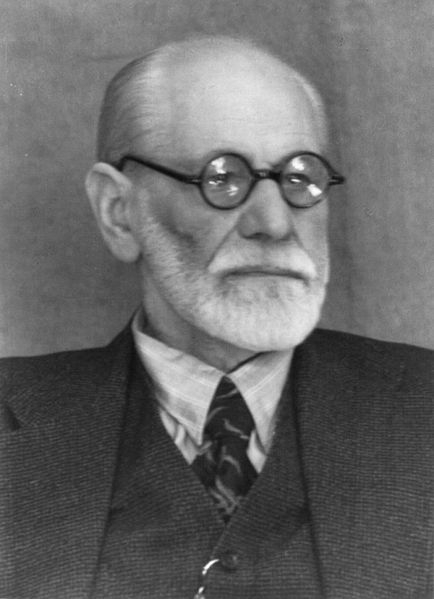
“Displacement” is a word that Freudian psychologists use to describe what happens when people substitute an imaginary ideal for an unacceptable reality. It’s a defense mechanism that helps otherwise healthy people cope with difficult situations. Unfortunately for some, displacement can become a debilitating delusion that prevents them from recognizing and dealing with the world as it is.

Crazy, huh?

Obama, Romney and New Arts Audiences

A lot of arts folks believe that the language we speak to traditional audiences and the language we speak to new audiences are mutually exclusive, and that they can’t be used at the same time. “If we speak to younger, more culturally diverse audiences,” so the argument goes, “we risk ignoring, alienating or offending the core audience that’s so important to us.”

I appreciate where that thinking comes from (“that’s the way we’ve always done it”) but I beg to differ. And to prove my point, I’d like to offer up two examples that arts pros can observe over the next eight months to learn how to speak more persuasively to undecided audiences.

The next president of the United States will be either Barack Obama or his Republican rival, who at this point appears to be Mitt Romney. But neither of these gentlemen will win the election by speaking exclusively to his base. Each will have to find a way to speak persuasively to his core supporters and, at the same time, to the broadest possible range of undecided, independent voters who, the pundits tell us, are going to determine the outcome of this election.

Can they do it? Obama did it in 2008. He spoke almost exclusively to undecided outsiders but never once alienated his inner circle of die-hard Democratic fans. He coalesced an incredibly broad range of old and new supporters while McCain doubled down on his base hoping to draw more of the GOP conservative faithful out to the polls. If Obama had thought for a minute that he couldn’t speak persuasively to more than one audience at a time, McCain could very well be president right now.

Can Romney do it? Well, that’s going to be a lot of fun to watch. The GOP is divided at the moment so if Romney wins the nomination, he’s going to have to win over the ultra-conservative side of his base and then craft a message that appeals both to them and to the more moderate independents and fence sitters. In the long run, Romney’s job could be a little harder than Obama’s because his base and his new audiences have so little in common.

And that, my friends, is the crux of the matter for both politicians and arts pros. The key to speaking persuasively to old and new audiences is to know what those audiences want, to look for common threads that unite their desires and to craft messages that appeal to universal yearnings. Obama’s 2008 message of “hope” and “change” was no mistake. It was the result of in-depth audience analysis and a meticulous strategic process of choosing words and images that would resonate with the broadest possible range of potential voters.

If your latest campaign message wasn’t the result of in-depth audience analysis and a meticulous strategic process of choosing words and images that would resonate with the broadest possible range of potential ticket buyers, take a look at what Obama and Romney do over the next few months.

It could make all the difference in the world.

Cliché Wrap Up

Here’s a concise summary of the Deadly Arts Marketing Clichés we’ve been talking about. These are just ten clichés I selected for fun or to make a particular point. If you think of others, send them along and we’ll add them to the list.

1. “Celebrate!” Perhaps the most beloved and widely overused word in the arts marketing lexicon, “celebrate” is what we say when we want to say, “Hey, we’re really excited about this and we want you to be, too.” Unfortunately, telling new audiences to be excited and giving them reasons to come to our events are two entirely different things. Better to know what excites new audiences and talk about that instead.

2. Insider Images. A picture – speaking of clichés – is worth a thousand words. To pick the right image, describe in a thousand words how your product satisfies the desires of new audiences and then choose an image that says the exact same thing. If you do it right, it probably won’t be a tutu or a tuxedo.

3. “We’re Wonderful!” Self-congratulatory boasting worked when everyone agreed about how wonderful we were. But in a world where our wonderfulness is no longer a given, every boast has to be accompanied by language that says, “And this is what that means for you.” Doing it right means talking as much about the customer as we do about ourselves.

4. “…set against the backdrop…” If you can’t find an original way to describe your event, sit down with some young person you’d like to see there and tell her in honest, direct conversational English what the show’s about and why you think she’ll enjoy it. In all likelihood, the fresh, naturally persuasive language you speak will be the best possible language for the brochure.

5. Travel Metaphors. Our job as marketers is to know what new audiences want and then describe how our products will satisfy those desires. Our job is not to assume what they want or conjure up things we think they should want or suggest imaginative things they probably would want if we mentioned them. So, if they never said they wanted to take a “journey of the imagination,” it’s best not to put it in the copy.

6. Culture. Go back up to Number 2 and look at the thousand words you wrote to describe how your product satisfies the desires of new audiences. If the word “culture” wasn’t one of the words, it probably doesn’t belong in your promotional copy.

7. Shakespeare Quotes. Strategic messaging means choosing words and images that motivate new audiences to buy tickets. If it’s impossible to describe a causal connection between the message choice and the customer’s impetus to get up off the couch and order tickets, it’s probably not the right choice – even if Shakespeare himself wrote it.

8. Fill-in-the-blank templates. Marketing is all about knowing what new audiences _____ and describing how our products will make them _____. Chances are that last fill-in-the-blank blurb you wrote was all about _____ and says nothing about your new audiences’ _____s or how your product will make them _____. (want, happy, you, want, happy)

9. Artsy Wordplay. Artsy wordplay happens when elite insiders sit in conference rooms dreaming up what we want to say to the world outside about our next event or season. If we want to avoid artsy wordplay, we have to leave our conference rooms, go out into the world, find our new audiences and learn what must be said to motivate them to buy tickets.

10. Anniversaries. The ironic thing about anniversaries is that people are more likely to buy tickets to our events to celebrate their own anniversaries than they are to celebrate ours. If you must ‘celebrate’ a special occasion, make it one that means something to new audiences, and for heaven’s sake if they show up give them some cake and ice cream.

That’s it. I’m tired of talking about clichés and I hope the point has been made. Now go find those younger, more diverse audiences you keep talking about, ask them what they want, and if you can make a reasonable case for your product being what they’re looking for, speak that language in your promotional messages instead of falling back on all those tired, old “that’s the way we’ve always done it” arts marketing methods.

Deadly Arts Marketing Cliché #1: “Celebrate!”

So, this cartoon was circulating around the blogs last week.

If you’re a marketer or someone who hangs around with graphic designers, you’ll get it right away. I got it because it’s a picture of me and my book designer friend Jeffrey, who responds with bemused annoyance to typographical offenses that most of us would never even notice. (Kerning refers to relative spacing between letters.)

My objective on this blog is to encourage arts pros to recognize non-strategic marketing messages and respond with similar erudite indignation: “I can’t believe those idiots used artsy wordplay on their brochure. That stuff went out with fax blasts. Who the hell do they think they’re talking to?”

Unlike the cartoon, though, there’s nothing malicious about this. I want to do it because our potential audience is changing and we’re still speaking a cutesy nonsense language that was developed half a century ago for people who loved us no matter what we said. Now of course, we’re talking to people who don’t love us quite so much and we need to be much more thoughtful, more intentional, about what we say.

Unfortunately, we as an industry have become so accustomed to our insider-speak that we’ve lost sight of how it works – or fails to work – on the audiences we most need to persuade. For example, I just got a subscription brochure from one of Southern California’s most prominent performing arts institutions that was designed around a clever but abstruse little chunk of artsy wordplay that, when viewed through the eyes of a fence-sitting outsider, is just plain embarrassing. The whole thing could have been produced back in 1982 when the NEA started tracking our decades-long decline in arts audiences. And given how unoriginal the pun was, and how our industry tends to recycle its favorite clichés ad nauseum, the same brochure could easily be sitting in some other organization’s dusty old archives.

The only way to break this cycle is to train ourselves to recognize these offenses and rail against the egocentrism that allows them to continue while arts organizations from coast to coast are closing their doors. We can talk about new audiences all we want, but if we’re not talking to them about how our products satisfy their desires, we might as well just keep chit-chatting with our dying fans and plan in advance for shutting the doors when there aren’t enough of them left to respond to our catchy, cute and oh so clever communications.

And as for “celebrate,” I could write at length about this deadliest of all arts marketing cliches – and I do in my book – but for now lets just say that there are only two reasons anyone should ever use the word “celebrate” in a promotional context: You’re inviting someone to an actual party, or you know for a fact, and can verify with objective evidence, that your target audience has a pent up desire to celebrate something by buying tickets to your event. Apply these rules with rigor and you’ll never need to worry about erudite colleagues responding with bemused annoyance to your organization’s lame rhetorical offenses.

I’m sorry if I sound a little peevish today, but this stuff is extremely important. Plus, I have a cold, Downton Abby’s over for the season and a friend just sent me information about a new event that’s coming to a local theatre called “Celebrate Dance.”

Argh.

Good Advice from Charles and Ray Eames

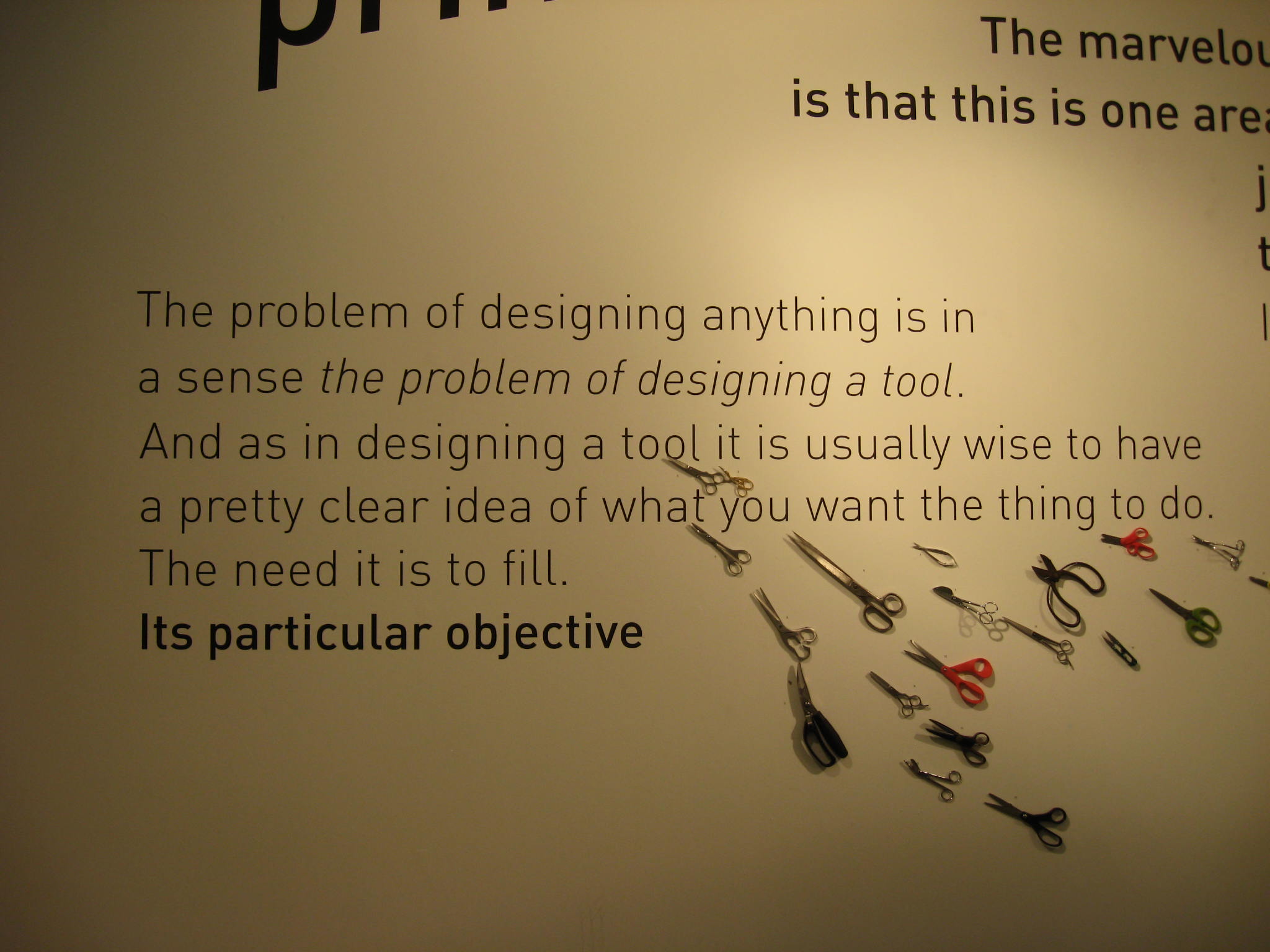
I’m taking a short break from our Cliché countdown to share something I saw Sunday at the Architecture and Design Museum in Los Angeles (A+D).

Part of the extraordinary Pacific Standard Time collaborative project here in Southern California, this exhibition zeroed in on Charles and Ray Eames’ design philosophy, and one particular quote caught my eye (click photo to enlarge for a clearer view).

I can’t think of better advice for arts leaders who often have a genuine desire to sell their products to new audiences, but who allow themselves to get stuck publishing traditional promotional materials that contain mostly self-congratulatory bombast, hackneyed clichés and relentlessly repetitive graphic design.

I think the Eames’ would be horrified at the material arts organizations crank out, mostly because the objectives that determine the design direction are so short sighted. In my experience, these objectives have been:

  1. To fit within traditional industry conventions
  2. To satisfy the expectations of senior decision makers (See 1. above)
  3. To find a marginally different way to do what we did last time (See 1. and 2. above)

The problem with these objectives is that they fill the wrong need. The overarching need is to sell tickets or admissions, but these objectives are aimed at satisfying the administrative needs of arts managers. We may believe that they’re the same thing, but a lot of the traditional conventions we use as benchmarks were established over fifty years ago under extremely different market conditions.

I think the Eames’ would agree that a marketing piece’s primary objective is to persuade as many people as possible – especially new people – to buy the product, and that they would set about trying to satisfy that objective first, while recognizing the more parochial needs of arts administrators as what they called “constraints.”

A piece that’s designed first to persuade could end up looking very different from a piece that’s designed to meet the expectations of conservative EDs, GMs and board chairs, of course, which is probably why we see so few of them. Real persuasion focuses as much on the one who is to be persuaded as it does on the persuader, and that’s not likely to be popular with folks who use marketing materials almost exclusively to talk about themselves.

I can’t say what an Eames-designed piece would look like, but given Charles and Ray Eames’ preoccupation with honesty, function, simplicity and finding art within that which is essential, I’d expect it to look a lot more down-to-earth and to make direct, un-ornamented, motivational connections between the people it was meant to persuade and the product it was designed to promote.

In other words, they’d recognize the task as a sales function and design arts marketing pieces that sell. They might not be as pretty as most arts materials are, but like the chairs that made the Eames’ famous, the beauty could end up being in the way they work as much as it is in the way they look.