Unknown's avatar

About Trevor O'Donnell

I'm an arts & entertainment consultant who's developed successful marketing and/or sales initiatives for Disney Theatrical Productions, Cameron Mackintosh, Cirque du Soleil, the Music Center of Los Angeles, Center Theatre Group, Blue Man Productions, Broadway’s Nederlander Organization and for numerous Broadway shows, performing arts presenters and nonprofit arts organizations across the US. I help my clients build larger audiences and earn more revenue by using smarter message strategies, tapping non-traditional audiences and employing innovative approaches to sales.

A Pop Quiz on Persuasion for Arts Pros

As I’ve mentioned often on this blog, strategic persuasion involves knowing what our audiences want and then using that information to describe how our products will make them happy. The more we know about what they want and the better we are at describing how our products will satisfy their desires, the more successful we will be.

If you’d like to test the potency of your organization’s persuasive endeavors, take out your latest brochure, ad, email or promotional piece and honestly answer these questions:

  1. Did you identify exactly whom your message was meant to persuade?   Y / N
  2. Did you do research or gather relevant objective data so you would know for a fact what your target audiences wanted?   Y / N
  3. Did you develop a message strategy that described how your persuasive message content would work, given what you knew about your targets?   Y / N
  4. Did you identify rational relationships between your targets’ stated desires and the ways in which your product might satisfy them?   Y / N
  5. Does the message you developed express or reflect these relationships in discernable ways?   Y / N
  6. Does your message content portray or describe members of your target audiences enjoying your product?   Y / N
  7. Does your copy contain the word ‘you’ or one of its variants?  Y / N
  8. Does the message state explicitly why the target audience would want to buy the product?   Y / N
  9. Does the message evoke positive personal emotions like those your customers will feel when they experience your product?   Y / N
  10. Did you project specific sales results based on the relative precision of your persuasive strategy?   Y / N

How’d you do?

Don’t worry; arts people are really bad at this. It’s not in our culture. As I said two posts ago, the culture of arts marketing is one of promotion rather than persuasion and there are a lot of old-timers at the top who believe that this sort of thing is beneath our dignity. So take these scores with a grain of salt and consider them a starting point for progressing up the persuasive ladder.

If you answered no to any of the first five questions, I’m afraid you’ll have to give yourself an F. Since strategic persuasion involves knowing what audiences want and then using that information to describe how your product will make them happy, you’ll have to have known exactly who those audiences were; you’ll have to have gathered credible information about their desires; you’ll have to have determined in advance how you planned to use that information; you’ll have to have married their wants with your offerings in rational ways; and you’ll have to have successfully described how your product would satisfy their yearnings. If you missed any of these steps, it’s not strategic persuasion.

If you did answer yes to the first five, please give yourself an extra point for each additional yes answer. Questions six through ten measure the extent to which your message content is customer-centered and ten is something I tossed in to make it an even ten, but also to suggest that the more specific you are in your message choices, the easier it will be to predict how they’ll perform.

If you’re among the majority who failed the test, you probably did what most well-intentioned arts organizations do: You assumed that you were speaking to people who had a self-motivating interest in your product and you presented your information in the most attractive, enticing and flattering manner possible. Unfortunately, that process allowed you to skip the research step, where you’d have learned what your audiences actually want, and it allowed you to fill up all of the available promotional real estate with self-indulgent hyperbole about your art and your organization without saying anything about the customers or why someone with a less than avid interest in what you’re doing would want to come.

Can arts marketers pass this test? Of course they can. Smart businesses take and pass this test every day with every marketing message they disseminate. It’s not difficult or expensive, but it does mean placing audiences at the center of our universe – a position that arts insiders have been occupying on an exclusive basis for a very long time.

We can either continue to spray our passive promotions at the world, hoping that new audiences will somehow magically decide they want us – and trying to raise more money when they don’t – or we can manage a transition from a culture of self-centered promotion to a culture of audience-centered persuasion and take sensible, measured, strategic steps toward convincing tomorrow’s audiences that we’re worth their time and money.

I don’t know about you, but I’m leaning toward persuasion.

Should Arts Marketers Emulate Superbowl Ads?

Superbowl ads are a lot of fun. I didn’t have a chance to watch them in real time but I’ve been getting a kick out of the post-game analysis to see whose ads were dubbed the best and whose stood the best chance of taking on viral lives beyond their original air dates.

Deciding which ads are good, though, is just ridiculous. The best ads sell the most product and we won’t know how that worked for a long time. In some cases, like Budweiser, we may never know because the product sells in such massive amounts over such a long span of time and in such a multi-layered marketing environment that attaching cause and effect to any given ad is a pretty tall order. Personally, I loved the Budweiser ad, but I also love good beer so it certainly didn’t work on me.

I did discover, though, that Hyundai was enjoying a significant bump in web traffic generated by its ad for the Santa Fe minivan. According to Edmunds.com, the Hyundai ad, which is about a boy and his mother gathering up a group of friends to take them to the park, generated a lot more traffic than an emotional Jeep ad that focused on returning troops.

What I appreciated about the Hyundai ad was that it did what good marketing should do. It showed how the product made its customers happy. In this case, it made the boy happy by solving his problem with neighborhood bullies, which was the entertaining, attention-getting part, but on a more fundamental level it showed the mother using the van to meet a practical need that many mothers share. By doing both very well the ad appears to have been very effective.

Compare that to the ad that tied the Jeep brand to patriotic emotions stirred by returning troops (with narration by Oprah, no less) and it’s easy to see why the near-term results were weaker. The subject matter may have been noble, lofty and moving, but the connection between motor vehicles and returning troops was tenuous at best. The commercial didn’t draw a clear enough line between what most people want from a vehicle and how a Jeep might make them happy.

I’ve written in previous posts that the key to motivating new arts audiences lies not in boasting about lofty, abstract promises that aren’t necessarily connected to what your audiences are looking for, but rather by demonstrating how your product will make its customers happy by satisfying their actual needs or desires. These two ads seem to be good examples of these ideas in action.

Arts marketers who want to develop effective marketing messages would do well to stay sharply focused on what their audiences say they want, and on creating messages that connect those stated yearnings to what the product can actually deliver. If the yearnings are about enjoying an evening out with friends and taking in a concert or show, for example, your job is to connect those wants to your product in the clearest possible way. (Hint: you’ll probably want to show some images of your potential customers having a good time in your venue.)

And keep in mind that arts marketing is not the Superbowl. Nobody cares if you’re clever or cute or entertaining. That’s not what you’re there to do. If you want to be memorable or attention-getting, just do what the Hyundai ad did and make sure that your entertainment value is a logical, integral, sensible outgrowth of your core message strategy.

That Hundai ad didn’t make it to the top of many “best” lists on Monday, but if it sells more Santa Fe minivans, who cares?

How Nice Is Your Package?

Chloe Veltman has an interesting post over at Artsjournal.com this week called “Of Angry Waiters and Oblivious Arts Managers” about the relationships that some arts institutions maintain – or fail to maintain – with their neighboring restaurants.

I don’t know enough about the particulars of that situation to express an opinion, but I do know this: Any audience-dependent cultural organization that doesn’t reach out to and maintain productive personal relationships with its destination partners needs a swift kick in the pants. The days of cultural organizations serving as anchors to neighborhoods with clusters of dependent amenities are drawing to a close while the era of collaborative destination marketing has been underway for some time now.

I worked for several years marketing Broadway as a tourism destination for Cameron Mackintosh. Most producers back then didn’t think Broadway needed to be marketed but, in reality, Broadway was competing with alluring entertainment destinations all over the world. It may be one of the most successful brands in the history of entertainment, but in practical terms, Broadway’s fortunes can rise or fall in relation to the popularity of the destination in which it operates.

The most striking thing I learned during that time was how interdependent the Times Square community was and how important it was for its attractions, restaurants, hotels, cultural institutions and travel service providers to sell it, together, as a competitive destination. My product was Broadway theatre, but I worked closely with sales and marketing executives from throughout the community to make coming to Times Square to see a Broadway show as attractive and satisfying an experience as it could be.

In returning to the nonprofit world, though, I found attitudes that were surprisingly insular and egocentric. Most of the cultural organizations I worked with paid little heed to the nearby amenities that contributed to their destination appeal, and many didn’t even collaborate with the catering companies that held contracts with their venues. The attitude was that the art was the draw and all other considerations were peripheral or subordinate and of only passing concern to arts marketers. “I know, let’s see if Domenico’s will give our subscribers a free dessert.”

Older, loyal, core audiences come for the show. We all know that. If they eat dinner or stay for a drink afterward, that’s all well and good, but it has little influence on their decision to buy tickets. We also know, however, that those audiences are diminishing and their heirs don’t have the same level of commitment to our products. For new audiences, the overall quality of the evening out can be the factor that determines whether they’ll choose an opera, a ballgame or a nightclub and when that happens, the appeal of the destination means everything.

Not every arts enclave is a major tourism destination of course, but the destination marketing concept applies whether you’re attracting people from down the street, across town, throughout the region or from another state or country. With arts audiences in steady decline (especially classical music audiences) we need to give our potential patrons every reason we can to spend their leisure time and dollars in our neighborhoods.

Do you know the owners of your ten nearest restaurants personally? Have you invited them to an event, given them a free membership or subscription, offered to do something special for their customers? Do you invite their employees to your shows? Have you sat down and discussed how you can work collaboratively to attract a larger, broader audience to the destination? Do you sell packages? Do you hang out with the non-arts marketers and sales execs who sell your destination to their customers? When was the last time a waiter called you on his cell phone to see if you had any last-minute tickets for his customers?

Chloe Veltman speculates in her post about the debt that local restaurants owe to their nearby cultural attractions and what would happen to Hayes Valley restaurants if the arts organizations left the neighborhood. But I think if you turn the question around the answer is equally poignant. What would happen to your arts organization if the amenities that contribute to your destination appeal were to suddenly disappear?

It’s Time to Stop Promoting the Arts

I’ve been thinking a lot about promotion and persuasion recently and I’m convinced that the reason the arts are losing audiences is that we don’t understand the difference.

The culture of arts marketing is one of promotion, of course. Always has been. And this was just fine back when demand was high, but the fact that audiences are in steady decline suggest that we need to be more persuasive, and we don’t seem to know what that means.

Fortunately, the good people at Merriam-Webster online dictionary offer a concise delineation:

Promote: To present a product for buyer acceptance through advertising, publicity, or discounting

Persuade: To move by argument, entreaty, or expostulation to a belief, position, or course of action

There it is, right there in the first two words. To promote is to present while to persuade is to move. Promoters offer information in hopes of stimulating pre-existing demand while persuaders motivate people to act through the use of reasoned arguments or appeals. Put another way, promoters present their stuff and wait for audiences to happen while persuaders make audiences happen by motivating people to attend. The difference is profound.

For a useful example, look at the concert industry. Concert promoters select acts that have built-in demand and then advertise or publicize them so that fans will buy tickets. They don’t build audiences; they exploit pre-existing demand through promotions. If the demand is weak and the acts don’t draw, the promoters stop booking them because you can’t successfully promote something for which there is insufficient demand. Promotion alone, because it is by definition passive, doesn’t work on audiences that need to be moved.

The tragedy in the arts is that our industry is built on a promotional model that’s incapable of delivering the audiences on which our future depends. We’re like concert promoters pushing acts that we believe in, but that don’t have enough fan support to satisfy the bottom line. We promote vigorously – and expensively – but because our promotional efforts lack strategic rigor, we can’t motivate enough new customers to keep ourselves in business.

The solution of course is to stop promoting and start persuading, but that’s easier said than done. Resistance to persuasion goes deeper than semantics. In the arts there are a lot of people – especially among older artists and administrators – who believe that persuasion is beneath their dignity and that having to appeal to under-motivated buyers diminishes the integrity of the art they’re there to provide. Art, to them, is too valuable to have to be sold.

And the problem is compounded by the fact that embracing persuasion as a survival strategy means accepting a reality in which people don’t like or value us as much as they once did, and that’s an extremely difficult thing for veteran arts pros to do. Some would rather continue promoting their endeavors with vain, bombastic, self-flattering, self-important, self-deluding marketing content than admit that they’re dependent on customers who lack a self-motivating interest in what they do. Persuading fence-sitting audiences means shifting the emphasis of our strategic communications from us to them, and that’s a change that few established arts leaders are willing to endure.

The good new is that the industry has plenty of young, well-educated arts administrators who grew out of the ambivalent, relativistic cultures that older arts pros find so frustrating. They have an intuitive understanding of what it will take to get their peers in the door and strategic persuasion, to them, is a given. The big question is whether they’ll be able to persuade the arts administrators who hire them to let them do what must be done.

Extremely Difficult Copy Tips for Arts Marketers

Regular readers of this blog know that I’m not much of a “helpful tips” kind of guy. I find most tips lists to be shallow and ineffective. If you follow arts pros on Twitter, for example, you’ll be bombarded every day with enough tips articles to solve the industry’s problems a hundred times over, but for some reason the core problems never actually get solved.

I think it’s because the very idea of “tips” suggests that making productive change is easy when in fact it’s extremely difficult. Organizations – especially nonprofit organizations – don’t work that way. Change at the task level often requires systemic change that most organizations are incapable of accommodating.

So rather than suggest that these tips are easy, I’m going to admit upfront that they’re incredibly hard to do. They question bedrock assumptions, they call for entirely new ways of thinking and they’ll produce processes and products that are unlike anything the arts have ever experienced. They’re so difficult, in fact, that many arts organizations simply won’t be able to make them happen.

Ready?

COPY TIPS FOR ARTS PROS WHO ARE SERIOUS ABOUT NEW AUDIENCES

1. Forget the Past

To be effective, you’ll want to write copy that’s original, professional, relevant and customer centric. Unfortunately, any example you dig out of arts marketing history is likely be clichéd, amateurish, derivative and egocentric. Better to start fresh than to perpetuate the industry’s bad habits.

2. Do Research

It is utterly impossible to write persuasive copy if you don’t know exactly who you’re talking to and what they want. And you can’t just dream it up. You have to really know, so make sure you’ve gathered plenty of objective external audience intelligence long before you begin writing.

3. Use Logic

Create a rational persuasive formula like the one in my last post: We know you want x (this will be what you learned from your research). We offer x (this will be how you describe your product as it relates to what they said they want). Therefore we can reasonably assume you will do (these will be your sales projections).

4. Personify your Targets

Create personalities that exemplify your data. If your research on younger, more culturally diverse audiences describes young, educated professionals in their late twenties/early thirties with diverse tastes in arts & entertainment who seek leisure experiences in small social groups, create a fictitious persona that embodies these characteristics. Then name her, describe her, find a picture of her on Google Images and write with her in mind.

5. Talk Normal

Speak in a natural colloquial style. If you have trouble writing this way, try actually sitting down with someone who typifies your target audience and persuading them to come to your next event. Record your conversation, transcribe what you’ve said and then edit to fit your needs. In all likelihood, the way you normally talk will be the most appropriate language for your written materials.

6. Be Honest

Start by writing out in the simplest possible language what’s true about your product and why your target audience would want to buy it. “Script Flippers offers classic plays reinterpreted for contemporary audiences in a casual creative space that offers food, drink and social interaction. Our focus group research revealed a desire among younger audiences for serious but current plays and complete evenings out featuring dining, entertainment and social interaction.”

7. Write About Them

Write about what you know they want. This will be especially difficult for arts professionals because we’re so used to writing exclusively about ourselves. But the essence of persuasion lies not in telling the world how wonderful we are, but rather in describing how happy our customers will be as a result of having purchased our products.

8. Spell Out Why they Should Come

It used to be that you could simply describe the arts with upbeat, enticing language and self-motivated people would come out of the woodwork. But self-motivated audiences are dying and new audiences don’t care as much so we have to motivate them by telling them explicitly why they should come.

9. Describe How They’ll Feel

Aristotle said persuasion requires three things: character, logic and emotion. You have to be a worthy source of the information (we’ll assume that’s usually true), you have to make a rational case (see “Use Logic” above) and you have to appeal to your audience’s emotions. If you want people to come to your event, describe what they’ll feel like when they get there so they’ll feel like coming.

10. Be Real

Arts marketing used to be the product of an authoritative but artificial executive voice that spoke on behalf of the organization. This voice was disconnected from any individual and spoke in only one direction: “The Springfield Center for Artsy Culture proudly announces an event of immense artistic importance…” Fortunately, the advent of user controlled social media has rendered this disembodied voice obsolete, so your job is to speak in language that’s informal, human, personal and conversational.

.

Changing the organizational culture to accommodate this type of work is challenging, but the work itself is easy. If the alternative is to do the same thing we’ve always done and hope for better results, what choice do we have?

Arts Marketing Doesn’t Work Because It’s Irrational

Featured

I mentioned two posts ago that good marketing is based on a logical formula that looks like this:

We know you want x

We offer x

Thus we can reasonably project that you will do y

The x is the product you sell, of course, and y is the behavior you expect from your customers, i. e. “We know you want a great night out featuring dining, socializing and high quality artful entertainment. We offer a great night out featuring dining, socializing and high quality artful entertainment. Thus we can reasonably expect that you’ll come to our destination with your friends or family, patronize one of our nearby restaurants, and experience a high quality performance event in our venue.

Spock SmilingWhen I studied classical rhetorical theory in grad school (don’t go away; this is good stuff) I learned that the first two parts of this formula are indispensable components of the persuasion process. Aristotle himself said that if you want to get somebody to think a certain way or do a certain thing, first you have to know what they need or want, and then you have to describe how your product will satisfy their yearnings. It’s a surprisingly simple yet immensely powerful idea that smart businesspeople, preachers, politicians and scoundrels have been using for the last 2,500 years.

Sadly, however, it’s an idea that’s completely lost on arts organizations.

In the arts we tend to ignore the first part of the equation and instead slip in all sorts of self-serving alternatives that don’t have the same impact:

We assume you want x

We hope you want x

We think you should want x

We think you need x because we believe it’s good for you

We’re really excited about x

x is so wonderful that your wanting it shouldn’t matter

Our artistic director has staked his career on the expectation that you want x

We knew your grandparents wanted x fifty years ago, but we’re too lazy to find out what you want now

We’re only interested in donors, subscribers and members who want x

Our marketing department actually knows what you want, but our executive director thinks you want x and he approves all the marketing

We think that if we find a clever enough way to get your attention you’ll want x

We’re celebrating our 25th gala anniversary of x

Alec Baldwin wants x

We’re too afraid that you don’t actually want x to find out what you do want

Plug any of these into the strategic equation and you’ll quickly discover that they don’t work. Logic doesn’t function that way. If we want the third part of the equation to remain constant and predictable, the first part has to be grounded in fact, and it must exist in a precise, rational, causal relationship to the second so that, together, they point to an inevitable outcome:

We know you want x

We offer x

Thus we can reasonably project that you will do y

If you want to learn in advance whether your marketing messages are optimally, rationally persuasive, ask yourself these questions:

Have we gathered enough objective, external evidence to know for a fact what our target audiences want?

Have we done a good job of describing how what we’re selling will satisfy our target audience’s stated yearnings?

Since the second question is entirely dependent on there being an affirmative answer to the first, there’s really only one question worth asking. And if the answer isn’t yes, there’s no logical reason to proceed.

Have you gathered enough objective, external evidence to know for a fact what your new audiences want?

A Human-Centered Approach to Arts Marketing?

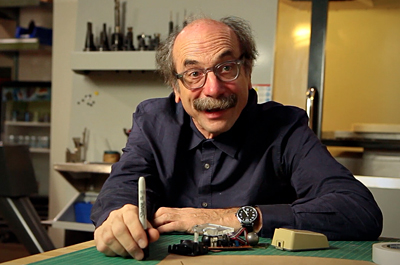
Last Sunday night, CBS’s 60 Minutes profiled a design consultant and Stanford University professor named David Kelley who founded a fascinating company called IDEO.

David Kelley - IDEO

David Kelley – IDEO

IDEO is a “global design firm that takes a human-centered, design-based approach to helping organizations in the public and private sectors innovate and grow.” The company’s philosophy is simple but it’s nothing less than revolutionary: create better products by watching people actually using them.

Here’s a brief exchange between Kelley and 60 Minutes’ Charlie Rose:

Charlie Rose: The main tenet is empathy for the consumer – figuring out what humans really want by watching them.

David Kelly: If you want to improve a piece of software, all you have to do is watch people using it and see when they grimace and then correlate that to where they are in the software and you can fix that, right? And so the thing is to really build empathy, try to understand people through observing them.

Charlie Rose: In other words, their experience will communicate what you need to focus on.

David Kelly: Yeah. Exactly.

According to Kelley, a group of like-minded insiders sitting in a room trying to design something for outsiders will inevitably miss the mark, while a diverse group of creative thinkers paying close attention to how people actually use a given product will be far more likely to succeed. It’s the empathy with the user and the understanding of how they interact with the product that holds the key to innovation. (If you’re using a mouse right now, or one of its descendants, you are in direct contact with one of Kelley’s innovations – something he and his team developed for a young tech entrepreneur named Steve Jobs.)

As an arts professional, I couldn’t help listening to Kelley’s “grimace” comment without thinking of people reading arts marketing materials. We know the grimaces happen­ – arts marketing materials are among the least innovative and most grimace-worthy design products imaginable – but if we take some time to understand when, where and why those grimaces occur, we may be able to make our messages more effective.

I think arts marketing is long overdue for a human-centered design overhaul. The only way to know how to design effective marketing materials is to develop a deeply empathic sensitivity to the way our potential customers interact with our messages. If the grimaces occur as soon as they see the product or brand there may be no hope, but if potential customers start grimacing when they see the vanity shot of the tuxedoed conductor, the tedious welcome letter from the board chair, the hokey production shot from last season, the arcane academic jargon, the artsy wordplay, the hackneyed blurb, the hoary old clichés, the imperious ballerina in the tutu, the sterile architectural shot, the fawning society pics, the thrilling anniversary celebration, the endless barrage of vainglorious hype or the conspicuous absence of anything having to do with them, there may be some room for improvement.

Can human-centered design work on marketing materials? Absolutely. Brand and communications strategies are right up IDEOs alley. It’s true that most arts organizations can’t afford companies like IDEO, but there’s no reason we can’t start paying attention to how our marketing messages work – not the response rates or click-through rates they generate, but how potential customers engage, or fail to engage, with our strategic message content.

Imagine for a minute that your organization could afford IDEO and you hired them to put together a task group of independent auditors to watch a test group of young, culturally diverse people reacting to your marketing materials. What would the auditors observe? Where would the grimaces occur? What would this task group recommend to you after having seen the way new audiences react to your marketing messages?

The business world is rapidly embracing the idea that its products should be designed not according to what companies think they should be selling, but rather how customers want to use the products they sell. In the arts, we don’t necessarily want to change our products to meet the comfort and convenience expectations of our customers, but there’s no reason we can’t empathize with our customers’ attitudes and dispositions in order to improve the way we persuade them to participate.

2013: The Year of Reality Based Arts Marketing [Oh, well…]

I posted this in January of this year hoping to offset the ever-deepening audience crisis and to prevent venerable institutions from tanking. Some losses are unavoidable, such as the sad passing of the great Rick Lester. But others, such as the failure of organizations that refuse to learn how to attract new audiences, are completely avoidable. Here’s hoping that 2014 bring us closer to the reality I predicted, and further from the reality we’ve been experiencing.

I said to Rick Lester at TRG the other day, in full agreement with his brilliant “You’ve Cott Mail” prediction for 2013, that I was planning to dub this the Year of Reality Based Arts Marketing. Rick mentions the medieval guildhall mentality that governs how arts organizations make management choices and suggests that in this new year we’ll embrace a more fact-driven approach to developing tomorrow’s audiences.

Here’s my take on what that approach will look like:

Reality Based Arts Marketing will be Non-traditional

Whereas most arts marketing is rooted in longstanding cultural sector traditions, reality based marketing will focus on the present and future. All options and choices will be derived not from how things were done previously, but rather from current market intelligence and strategic goals and objectives. A reality based orchestra marketer, for example, will feature a photograph of her tuxedo-clad conductor only if she has enough objective, external evidence to suggest that it resonates with her target markets’ needs, desires or expectations.

Reality Based Arts Marketing will be Audience-centered

Whereas arts marketing is almost exclusively self-centered, reality based arts marketing will be focused on potential audiences and the extent to which the products promise to satisfy their stated needs, desires or expectations. Rather than filling season brochures with self-congratulatory information about the events, artists and institutions, reality-based marketers will devote a reasonable portion of their promotional real estate to the audience and to demonstrating how the products they’re selling will make them happy.

Reality Based Arts Marketing will be Data-driven

Whereas arts marketing tends to be driven by gut instinct, creativity, insider opinions and the subjective judgements of under-qualified executive leaders, reality based marketing will be driven by hard data. Reality based marketers understand that the only way to know how to satisfy a potential audience’s needs, wants or expectations is to know exactly what those needs, wants and expectations are, and the only way to do that is to gather, aggregate and analyze objective market data.

Reality Based Arts Marketing will be Rational

Whereas most arts marketing is rooted in a desire to disseminate messages that are eye-catching, informative and enticing, reality based marketing will employ pre-meditated strategic persuasion. Persuasion is a technical process that involves not simply sharing information, but describing how a product meets a need, want or expectation in such a way that it triggers predictable behaviors. Reality based marketers don’t get the word out, they structure rational persuasive appeals that motivate people to come in:

We know you want x; we offer x; thus we can reasonably predict that you will do y.

In traditional arts marketing the formula looks like this:

We think you might want x; we offer x; but since we don’t actually know what you want, we’re going to do what we’ve always done and then sit here and hope that you will do y.

Reality Based Arts Marketing will be Professional

Whereas most arts marketing conforms to the unique and often eccentric standards of the nonprofit sector, reality based arts marketing will strive to adhere to the standards and practices of the broader marketing profession. Reality based arts marketers will look beyond the traditions, habits and horizons of their small, insular, diminishing industry for professional real world solutions.

Reality Based Arts Marketing will be Personal

Whereas the language of traditional arts marketing is formulaic, artificial, hyperbolic, self-important and uni-directional, the language of reality based marketing will be fresh, authentic, humble, generous and conversational. Reality based arts marketers – because they’ll be personally and meaningfully engaged with new audiences – will converse with them in a naturally persuasive language they understand.

The problem with traditional arts marketing isn’t that it’s unrealistic, but that it’s based in a reality that no longer exists. Most of our communications traditions date to the middle of the last century. If we’re already thirteen years into a new century, it’s time to develop a new set of traditions. Or better yet, abandon tradition altogether and embrace an approach to strategic communication that changes with the markets on which our futures depend.

Worth Repeating

I’m taking some time out to work on a few local projects, but wanted to repost these Ten Marketing Myths That Arts Leaders Still Believe because they’re a good summary of what this blog is about.

I’m convinced that the solution to our audience problems lies in vanquishing these myths, repairing the damage they’ve done and embracing a reality-based approach to strategic communications. It’s not difficult and it doesn’t really cost anything, but for some reason it remains one of the cultural sector’s most daunting challenges.

Myth 1. Marketing is Common Sense

Reality: Marketing is a profession. Its practitioners benefit from in-depth academic study, insight into communication theory, practical business experience, knowledge of current trends and innovations, intra-disciplinary professional development and, as with all professions, plenty of accumulated expertise. Marketing is no more common sense than finance, law, engineering or playing the violin.

Myth 2. Executive Leadership Confers Marketing Expertise

Reality: The belief that marketing is common sense allows arts leaders to think they possess marketing expertise by virtue of their rank. But arts leaders rarely arrive at their positions with enough knowledge or hands-on experience to claim such professional acumen. Most are under-prepared amateurs who are nonetheless called upon to make high-stakes decisions that impact the health and sustainability of their organizations.

Myth 3. Arts Marketing is Like Business Marketing

Reality: Arts marketing is unique, unusual and unlike business marketing in many significant respects. While business marketing tends to be current, customer-centered, rational and bottom line-driven, arts marketing is tradition-bound, self-centered, subjective and driven by multiple, overlapping and often contradictory institutional goals and objectives.

Myth 4. The Arts Do A Fairly Good Job of Marketing

Reality: The arts have been losing audiences steadily for the last three decades and all the while sending the same loopy, hackneyed, self-flattering marketing messages: “Celebrate Live Performance!” “Take a Journey of the Imagination” “If Music be the Food of Love…” “Experience the Magic” “It’s a Zany, Madcap Romp!” etc., etc., etc.

Myth 5. Technology is the Answer

Reality: Content is the answer. Always has been. Technology is a tool for delivering content so it’s more akin to your mail carrier than anything else. If you don’t expect your mail carrier to sell tickets, you shouldn’t expect technology to do it either.

Myth 6. Marketing is a Creative Enterprise

Reality: Marketing has a lot more to do with math and science than it does with creativity. Creativity is to marketing what paint color is to building a house. It’s an important and necessary part of the process, but it’s of no use whatsoever while the architects, engineers and builders are drawing up the plans.

Myth 7. We’re Selling Tutus, Tuxes and Tights

Reality: A casual observer could be forgiven for believing this is true, but the arts are actually selling customer experiences, which means – though you’d never know it by looking at our marketing – that it’s all about the customer. The frivolous, clichéd, self-indulgent trappings we use to decorate our marketing materials are old-fashioned insider shorthand that curious outsiders often find obscure and off-putting.

Myth 8. Brainstorming is the Same as Strategy

Reality: Putting a group of artsy insiders in a conference room and having them dream up creative ways to tell the world about upcoming events is the worst possible approach to developing strategic sales messages – yet it’s the dominant model! The best approach is to identify targets, gather objective market intelligence about their needs, wants and desires, then construct rational persuasive appeals that describe how the products will satisfy their yearnings.

Myth 9. Self-Congratulatory Bravado is a Good Way to Sell Tickets

Reality: This may have been true back in the olden days when there were a lot of people who thought we were as wonderful as we think we are, but it doesn’t appear to be true today. New audiences need to be told explicitly why our wonderfulness is of value to them or, in other words, how our products will satisfy their yearnings.

Myth 10. Audiences Need the Arts

Reality: While it may be true on a collective, philosophical level, it’s not true on a pragmatic, individual level. No single person needs any particular arts organization so if an organization’s “you need us” attitude creeps into its marketing messages, no matter how coy or clever the packaging may be, the message ends up being false, presumptuous, and condescending.

Shortly after posting these I added another set of myths which you can find here.

Thanks for visiting. If you’re new, feel free to scroll down and browse. Otherwise, I’ll get back to posting on a regular basis as soon as possible.

What the Arts Can Learn from Obama’s Victory

Last week I wrote about unfortunate similarities between the arts and the Republican party.

Today I’d like to turn that post into a positive set of suggestions for building stronger constituencies – primarily among younger, more culturally diverse audiences.

Here are six lessons the arts can learn from last week’s Democratic victories:

Build a Bigger Tent

Obama appealed to a broad, diverse constituency. He didn’t just talk about younger, more culturally diverse audiences, he sought them out, engaged with them and spoke to them in a language that resonated with their yearnings.

If the arts want new audiences, we have to stop aiming our persuasive communications at subscribers, members, donors and industry colleagues, and start talking to tomorrow’s audiences in a language they understand.

No More Gut Instinct Marketing

Obama never uttered a word that wasn’t fully vetted by his campaign strategists. He’s a smart guy whose instincts are probably spot on, but he knows that marketing is not his job.

Arts leaders have to stop using “that’s the way we’ve always done it” approaches to marketing, and start using persuasive strategies that are guided by up-to-date market intelligence and rational methodologies. Imagine an Obama campaign guided by arts marketing tradition and you get a sense of how vitally important this is: “Experience the Magic of Barack! Join us for a Sensational Second Term.”

Reconnect Leaders with Audiences

Obama’s path to the presidency wound its way through countless diners, church basements, community centers, VFWs and middle-class living rooms. He had an intuitive understanding of how to connect with undecided voters because he knew the undecided voters with whom he needed to connect.

Arts leaders, meanwhile, tend to live insular lives surrounded by artists, colleagues, donors and like-minded supporters – far removed from the worlds of the younger, more culturally diverse audiences on whom their futures depend.

If we want to speak persuasively to younger, more culturally diverse audiences, senior decision makers will have to engage with them so they know how to talk to them.

No More Tutus, Tuxes and Tights

All smart politicians know to avoid words and images that trigger negative associations in the minds of voters. It’s why Romney got in so much trouble when his ‘private’ comments about the “47%” went public, and why Obama focused so much on the future rather than the less attractive here and now.

Arts marketers who want to attract fence-sitting audiences need to learn how to emphasize the universally appealing aspects of their products while de-emphasizing some of the less important – and potentially offensive – secondary characteristics. A photo of attractive young people enjoying a drink in your lobby bar, for example, may be far more persuasive than yet another vanity shot of your sweaty conductor.

Strive for Balance

According to Propublica, Obama’s victory cost $1.83 per vote while Romney’s loss cost $6.35 per vote, suggesting that fundraising may not be as important as appealing to the right people and knowing how to talk to them.

The arts may not have as many deep-pocketed donors standing by, but the organizational culture of the arts is still heavily steeped in fundraising. Always has been. Marketing is a relative newcomer that isn’t anywhere near as well integrated into our industrial DNA.

The quandary the arts face now, of course, is that marketing is more important than ever and no amount of fundraising will save us when we can’t attract enough customers to warrant keeping the doors open.

Speak a Universal Language

Obama spoke a simple, natural, conversational language that was pitched to a diverse array of undecided outsiders. He had many individual expectations to satisfy, yet he talked like a regular person who was chatting with his contemporaries about the fulfillment their dreams an aspirations.

The arts, meanwhile, speak a loopy nonsense language that was developed for affluent white arts lovers in the middle of the 20th century. Most of those people are dead now, but for some reason we still speak as if they’re on the receiving end of every season brochure, radio ad and email.

If the arts want to reach new audiences, we have to find out exactly who they are and what they want out of life, and then speak to them in an honest, original, down-to-earth language that describes how our products will make them happy.

If we can’t do that, we probably don’t deserve their votes.